

Let’s be honest: sometimes as writers, we treat setting like stage scenery. It’s there in the background while our characters talk and act, but it doesn’t really do much.
Here’s the problem with that: if you could drop your characters and their conversation into any other location and it wouldn’t change the story, then your setting isn’t working hard enough for you.
If you’ve received had the dreaded “floating heads” feedback—where your readers can tell characters are talking, but they don’t know where they are, what they’re doing, or why they’re there—then chances are you’ll know exactly what I mean.
The good news? Your settings can do so much more than just give your characters a backdrop. They can shape your story’s theme, create conflict, and provide opportunity.
In fact, they can become characters in their own right—helping or hindering your protagonists as much as any other character could.

So what is setting?
Writers already know what setting is, right? It’s the time, the place, the anchor for our story. We’ve all filled in those boxes in our plot outlines: Victorian London. A small-town café. A galaxy far, far away.
But here’s the thing—while we all know how to name a setting, we don’t always stop to think about what setting actually does. Too often, it just sits there like wallpaper.
The truth is that a strong setting isn’t just where your story happens—it’s why it happens the way it does. It shapes your characters, influences their choices, and more.
Pulitzer Prize–winning writer Eudora Welty put it this way:
“Place in fiction is the named, identified, concrete, exact, and exacting landscape the characters inhabit… it is by knowing where you stand that you begin to grow.”
And Toni Morrison went even further:
“I’m not interested in stories that are not about the interior life of people who live in a place — a place that is not a backdrop but a character in itself.”
When we look at setting in this way, we see that it isn’t decorative—it’s formative. It shapes our characters’ identity. It anchors their emotions. And when we as writers use setting well, it can pull our readers deeper into our story’s world.
Settings Can Embody Your Story’s Theme
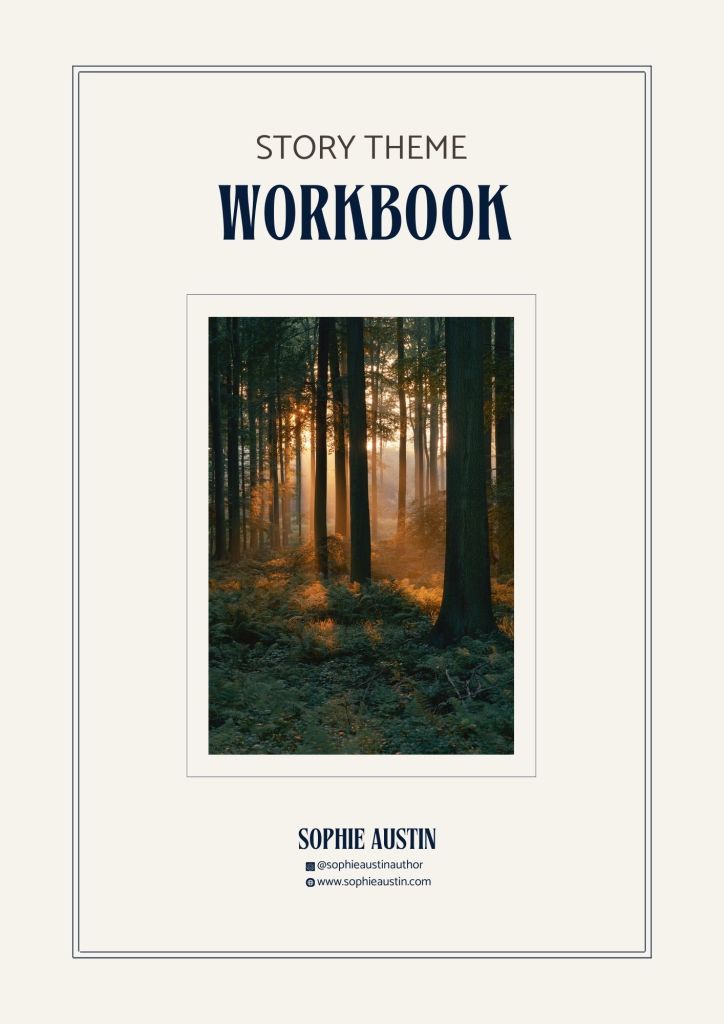
Before we dive into settings, let’s pause for a second and talk about theme.
“Theme” is one of those slippery words writers hear all the time, but it can feel a bit intimidating. At its core, your theme is simply the big question or truth your story is wrestling with. It’s the heartbeat underneath all the plot twists and dialogue – the reason why you’re writing, the thing you want to explore.
(no sign-up required)
Now, our theme isn’t the same as “moral of the story.” Instead, your theme is the thread that ties everything together – it’s what makes your story resonate on a deeper level.
So what might a story theme be? Here are some examples of themes that might be used in different writing genres:
- Can love truly conquer all?
- What makes us human in the age of machines?
- Where’s the line between justice and vengeance?
So why am I talking about your story theme in a post about supercharging your settings? Because once you’ve identified your theme, you don’t have to spell it out in neon lights. Instead, you can weave it into your settings and let your world do the talking.
And that’s where things get magical!
Think of The Great Gatsby. Fitzgerald didn’t just plop his characters into random neighborhoods of New York. Every location reinforces the story’s theme—the promise and corruption of the American dream:
- East Egg → represents old money, permanence, aristocracy
- West Egg → represents new money, flashiness, imitation
- Valley of Ashes → represents decay, corruption, the rot beneath the glitter – and possibly that not everyone can achieve this dream
In Fitzgerald’s work, the settings themselves are exploring the theme. They tell us something the characters don’t always have words for.
When you let your settings embody your theme, you can deepen your storytelling, and you can explore the questions that make us, as writers, tick. Readers may not consciously say, “Oh, this setting represents the author’s theme,” but they’ll feel it—and that’s what makes a story stick.
Settings Can Create Conflict

But settings can do even more than that. Think of our story settings as an onion – the core layer would be the story theme, what it represents for that question you’re asking. But we can give them another layer, too. We can use them to create conflict in our story.
Conflict is the fuel of storytelling – and settings are a sneaky, powerful way to add more of it.
Think about it: a powerful setting isn’t neutral. It can be uncomfortable, dangerous, or downright hostile. It can trap your character, expose their flaws, or push them into choices they’d rather avoid. A cramped drawing room, a storm at sea, a crowded newsroom—these places do something to the people inside them.
And the beauty is, conflict-driven settings don’t just create drama for the sake of it. They reveal who your characters really are. They weave into their arcs, and let our readers discover something about our characters. Do they adapt? Do they crack? Do they fight their way out?
When you design settings that create friction, you’re not just making life harder for your protagonist—you’re showing us why their journey matters.
Conflict settings are the ones that put pressure on your characters, trap them, or test them. They become external forces that mirror or magnify internal struggles.
Some examples:
- In Jane Eyre, Lowood School and Thornfield Hall push Jane to confront oppression, independence, and self-worth.
- In The Martian, Mars itself is the antagonist—hostile, unrelenting, and life-threatening.
- In The Devil Wears Prada, the Runway magazine offices pile on social constraints Andy doesn’t understand, sparking tension at every turn.
These aren’t just “places.” They’re engines of conflict. They raise the stakes. They force characters to grow—or risk breaking.
Settings Can Offer Opportunity

Here’s the flip side: if every single setting only piles on obstacles, your story risks feeling relentlessly heavy. Readers need contrast – and your characters do, too.
That’s where opportunity-rich settings come in. These are the places that open doors instead of slamming them shut. They give your characters a glimpse of what could be – they offer them a chance to breathe, to hope, maybe they show them what they could have, if they achieve their goal, or heal their wounds.
A hidden garden might spark a character’s creativity. A bustling city could represent freedom and possibility. Even a quiet library can become a place of refuge, self-discovery, or connection.
And just like conflict settings reveal how characters handle pressure, opportunity settings reveal what they long for. They show us not only what the character is fighting against, but also what they’re fighting for.
In The Hunger Games, the woods outside District 12 are Katniss’s place of freedom, they show the reader her values in physical form.
In The Great Gatsby, the garden glowing with fairy lights when Gatsby reunites with Daisy pulses with possibility (which makes the unraveling sting even more).
In The Devil Wears Prada, Paris is Andy’s reward: it symbolises prestige, belonging, access to power. But it’s also where she finally sees the cost of staying on that path – will she end up just like Miranda?
These spaces of hope and possibility don’t weaken your story’s tension—they sharpen it. Because when readers see what’s at stake, they care more about whether your character will win or lose it.
Allies vs. Antagonists
Here’s a fun way to think about it: your settings can actually take sides in your story. Some act like allies, nudging your character forward and giving them space to grow. Others behave like antagonists, throwing obstacles in their way or making life downright miserable.
And the best part? A single setting can switch roles depending on the moment—what feels safe one chapter can feel suffocating the next.
- Ally settings help characters move closer to their goal.
- Antagonist settings block them, test them, or strip them down.
And just like human characters, they can shift roles depending on the scene. That same manor house that represents permanence for one character might feel like a suffocating prison to another.
Summary
In short, our settings aren’t just where things happen. They make things happen.
They can:
- Embody your theme and carry the bigger questions of your story.
- Generate conflict by challenging your characters or boxing them in.
- Offer opportunity by giving hope, clarity, or contrast.
So next time you’re writing, ask yourself:
- Does this setting help or hinder my character?
- How does it tie into my theme?
- What secret, mood, or goal does this place hold?
Writing exercise:

Let's try and put this into practice for your work-in-progress:

1. Pick one scene.

2. Ask yourself: If I changed the location, would the meaning or stakes shift?

3. Then push further: How could this setting embody my theme? Is it acting as an ally—or as an antagonist?
Until next time – happy writing, writers!
Read books I’ve written – The Lamplighter’s Bookshop

The Lamplighter’s Bookshop is my debut novel, a historical romance set in 1899.
When Evelyn Seaton answers an advertisement for an assistant at a forgotten bookshop in York, she is not the only one with something to hide.
There she meets the enigmatic and prickly William Morton, an aspiring writer keeping secrets of his own. But when the walls that Evelyn has built around herself start to crumble, there is only one person she can turn to.
As the layers are brushed away, can Evelyn and William find the courage to write the next chapter of their story?
 Sophie Writes
